Sterile Processing Program Options for Career Changers 2026

We follow strict quality and ethics policies to make sure our content is honest, accurate, and helpful. Learn more about our editorial guidelines.
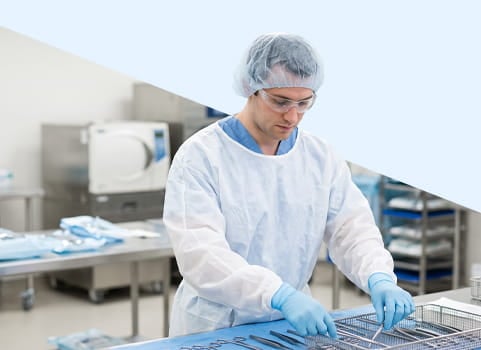
A sterile processing technician is an important part of the healthcare team, making sure that all surgical tools and medical devices are clean, inspected, assembled, and sterilized before use and reuse. They ensure that all surgical instruments and medical devices are meticulously cleaned, inspected, assembled, and sterilized. This is essential work to make surgeries and medical procedures safe for patients and defend against possible infections.
With healthcare jobs only expected to grow over the next few years, changing careers and becoming a sterile processing tech could be a great move. But do you need in-depth training? And how long does a sterile processing technician program take? Here’s what you need to know.
Key takeaways
- Sterile processing technicians play a critical role in patient safety by cleaning, inspecting, and sterilizing surgical instruments and medical equipment.
- You don't need prior healthcare experience to get started, though formal training can help you stand out to employers.
- Training can be completed in just a few months, depending on the program and your schedule.
- Certification can boost your job prospects and demonstrate your knowledge and commitment to the field.
- Sterile processing offers an affordable entry point into healthcare with strong job demand and opportunities for career growth.
Why become a sterile processing technician?
According to the Bureau of Labor Statistics, it’s expected that there will be around 72,760 new sterile processing jobs added to the industry over the next few years, meaning that there will be plenty of opportunities for new, entry-level workers in this role. Besides the potential for many job openings, sterile processing is one job that can only be done well by human hands.
As AI continues shaping the workforce, it’s normal to be concerned about the impact it will have on your career, especially if you’re looking to switch jobs or industries. Overall, it’s safe to say that healthcare jobs require the kind of hands-on work, empathy, and compassion that only a human can bring to the table, meaning that work in this industry is likely to remain stable over the next few years.
Read more: What Does A Sterile Processing Technician Do?
How to know if sterile processing tech is the right job for me
Sterile processing might be the right job for you if you:
- Enjoy working in healthcare and contributing to patient safety behind the scenes.
- Have strong attention to detail and can follow procedures accurately.
- Take pride in keeping things organized, clean, and well-maintained.
- Are comfortable working with medical instruments and equipment.
- Can stay focused while performing repetitive tasks that require precision.
- Understand the importance of following safety standards and regulations.
- Work well under pressure and meet deadlines in a fast-paced environment.
- Have strong problem-solving skills and can identify damaged or malfunctioning instruments.
- Enjoy being part of a healthcare team and supporting surgeons, nurses, and other medical professionals.
- Are comfortable standing for extended periods and performing physical tasks such as lifting instrument trays.
- Value consistency, accuracy, and quality in your work.
- Want a healthcare career that does not involve direct patient care but still makes a meaningful impact.
“Sterile Processing is great for a person that wants to go into the medical field,” Sterile Processing Instructor and Certified Surgical Tech, Sharon Jones, said, “but doesn’t want to have direct patient contact. It’s also a great career for people that pay close attention to detail, like organization and structure, and like being part of a team.”
Do you need healthcare experience to start a sterile processing career?
No, you don’t need healthcare experience to start a sterile processing career. The main requirement to get started in this job is a high school diploma or equivalent. But if you don’t have a background in healthcare in some way, getting formal training as a sterile processing technician before applying for jobs can be a good idea. While many employers will likely hire techs who just have their diploma and train them on the job, having sterile processing education and credentials can help you be more competitive and could potentially help you qualify for higher starting pay.
Read more: Going Back to School as an Adult
How long does it take to complete a sterile processing technician program?
The time it takes to finish a sterile processing technician program can really depend on you and the program you’re enrolled in. For example, if you’re enrolled in an in-person program at a local trade school, it may take you 6 months to a year to complete everything because you have to attend scheduled classes and may need to complete lab hours or hands-on training hours. The time it takes you to graduate is dictated by the schedule set out by your school.
An online option can offer a quicker timeframe, but how long it takes depends heavily on you and your schedule. For example, with Penn Foster’s online Sterile Processing Technician Career Diploma, you could potentially earn your diploma and sit for your certification exam within 2-4 months. * Since the classes are designed to be self-paced, you’re able to login, study, and take exams whenever you have time. For some people, that means they can dedicate a handful of hours every day to get it done. For others, it’s a few minutes during work breaks or between taking care of the kids or while waiting for the laundry to be done. Whatever works best for your goals and your life, no pressure.
What you'll learn: sterile processing technician curriculum overview
Different sterile processing programs may put the focus on different areas, but in general, all students should learn:
- aseptic techniques
- infection prevention practices
- medical terminology
- anatomy and physiology
- Microbiology
- HIPAA regulations
- patient privacy standards
Strong programs should also cover:
- surgical instrumentation
- decontamination and sterilization procedures
- inventory management
- quality assurance
- workplace safety
- industry regulations
- and professional communication.
Through our Sterile Processing Technician Program curriculum, graduates should come away with a strong foundation in the technical, regulatory, and interpersonal skills required for success in sterile processing and healthcare support roles and be prepared to sit for the Certified Registered Central Service Technician (CRCST) exam.
Sterile processing technician certification and the CRCST exam
Getting certified as a sterile processing technician reaffirms that you have the experience, knowledge, and skills necessary to be successful at your job.
“Requirements vary by state and/or facility,” Sharon advised. “Some employers will hire an applicant that isn’t certified but then requires certification to be obtained within a certain timeframe. Certified technicians can qualify for higher pay and may be able to move up the clinical ladder over someone that isn't certified.”
Unlike a lot of other healthcare certifications, the CRCST exam isn’t something that you need to get before you get a job in the field. In fact, to become fully certified, you will need to obtain verified work experience. But you can get provisional certification before you find a job, which can be helpful to show employers you have the knowledge and just need to apply it to real-world work.
Quick facts about the CRCST exam
Who is it for: Working sterile processing technicians who want to validate their skills or new sterile processing technicians who want to show they have the knowledge to excel in the role.
Eligibility requirements: 400 hours of documented work experience OR if you’re taking the Provisional Exam, you must submit 400 hours of documented work experience within 6 months of passing the exam.
Format: 150 multiple-choice questions
Time: 3 hours
How to take the exam: The exam is done on a computer at a Prometric testing center near you.
Exam cost: $140
Retake policy: If you fail the first exam, you can submit to retake it after 6 weeks. The retake fee is $140.
Renewal: To maintain your credentials, you must renew your certification annually by submitting Continuing Education (CE) credits and renewal fees.
How to prepare for the CRCST exam
Your online Sterile Processing Technician curriculum is designed to help you prepare for the exam and, as part of your tuition, when you graduate, you’ll receive prep materials and a voucher to cover the cost of the exam. Outside of the prep materials and your studies, the best way to get ready for the test include
- Making sure you have enough time to study. Don’t just cram the night before your test. After you register, you’ll have time to review your notes and materials, so make a study plan.
- Familiarizing yourself with what is on the exam. The Healthcare Sterile Processing Association (HSPA), which offers the certification, has an exam outline that covers what content you can expect to be included in the exam. This can help you focus in on what you need to study.
- Creating study guides and flash cards. Using your notes and even AI as an assistant, create helpful study guides and flash cards that you can use to test yourself and make sure you’re focusing on the right material.
- Taking practice tests. This is a great way to show you what you’re strongest at and what you need to study a little more. You can also time yourself to see how much time you need to complete the full exam. Remember, you get 3 hours to complete all 150 questions.
- Making sure to get enough rest the night before. You want to go into test day well rested and ready to go. You also don’t want to risk sleeping through your alarm! Make sure to arrive early at the testing center, as well, so you don’t have to worry about rushing through the whole check-in process.
Sharon also emphasized using study tools and practice to prep for the exam. “Make flash cards and practice with friends and family,” she said. “Write down questions and answers in a notebook. Record questions and answers to play back and listen in your spare time!”
Read more: The Busy Mom’s Guide to Going Back to School Online: What to Expect and How to Make It Work
Program costs: sterile processing vs. other healthcare pathways
Sterile processing can be a great entry-level career in healthcare since it doesn’t require as much experience or training as many other healthcare jobs. If you’re considering a few different potential paths as you’re looking to change careers, a big consideration is probably how much it costs to get the training you need to actually get a job. While each healthcare role and program has its pros and cons, one of the benefits of the Sterile Processing Technician Program is that it is relatively affordable compared to other programs.
While tuition costs for programs can change depending on several factors, as of June 2026, the total cost of Penn Foster’s Sterile Processing Technician Program if paid in full is $879. Comparatively, the cost of our other popular programs can be a little more expensive:
- Medical Assistant Career Diploma: $1,599
- Medical Billing and Coding Career Diploma: $1,049
- Pharmacy Technician Professional Career Diploma: $1,149
Now, all of the programs, including Sterile Processing, offer affordable monthly payment plan options, so you definitely don’t have to pay all upfront. And, often, when a program is designed to help you prepare to sit for a certification exam, the cost of the certification exam is included in your tuition, so you won’t be paying additional money later for that.
Read more: 6 Tips for Going Back to College or Career School as an Adult
Start your sterile processing career with Penn Foster
Becoming a sterile processing technician can be a great way to change careers relatively quickly, affordably, and with confidence. If you’re ready to make a change and get started, you can enroll online 24/7. Want to learn more about how the program works, what you’ll learn, or program costs? Fill out our secure form and our expert Admissions Specialists will reach out to help!
* The estimated completion times are based on completion times for learners enrolled in this program from May 2021 - April 2022, excluding withdrawals.