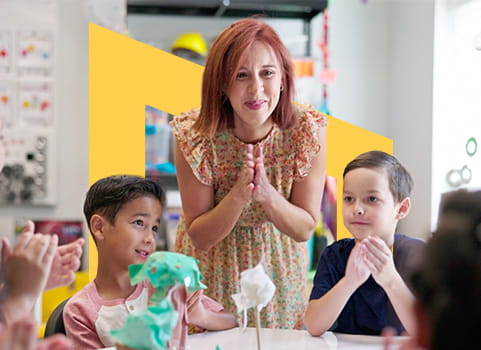
The Impact of Dramatic Play in Early Childhood Education

We follow strict quality and ethics policies to make sure our content is honest, accurate, and helpful. Learn more about our editorial guidelines.
Key takeaways:
- Dramatic play is a powerful, research-backed learning tool that supports language development, social-emotional growth, cognitive skills, and executive function — making it a foundational component of developmentally appropriate early childhood education.
- Play evolves as children grow, moving from parallel play in toddlers to complex cooperative role-play in preschool and more structured, academically integrated dramatic play in kindergarten.
- Educators and caregivers play a key role by intentionally designing play environments, protecting time for sustained play, using open-ended questions, and embedding literacy and math naturally — all without requiring expensive materials.
One of the great joys of being a young kid is the ability to so seamlessly enter a world of make-believe. It turns out, playing make-believe is commonly used in early childhood education as a learning technique called dramatic play. Dramatic play is a foundational learning experience where children play pretend or role-play different scenarios, from real world activities like grocery shopping to pretend fantasies like fighting dragons. This technique has a very meaningful impact on children as they develop their cognitive, social, and language skills.
What is dramatic play in early childhood education?
Dramatic play is used in early childhood education as a way for children to develop skills in a variety of areas. It is often used for toddlers, preschoolers, and kindergarteners in the classroom or even in designated dramatic play centers. Sarah Owens, early childhood education instructor at Penn Foster, says “Dramatic play is a powerful and essential tool in early childhood education that helps children develop an understanding of who they are and how the world works. It's vital that early childhood educators take time to thoughtfully design dramatic play centers, including materials and themes, that hold value for the children in their care and expand on their experiences, cultures, and community.”
Dramatic play can be structured or unstructured, depending on the type. Some examples of dramatic play in early childhood education include:
- Domestic or household mimicry
- Fantasy or make-believe
- Job roleplay
- Animal play
- Construction play
- Transportation play
- Acts of heroism
- Media reenactment
- Socio-dramatic play
Why dramatic play is important in early childhood education
Dramatic play can have a very strong impact on young children’s development. For children who have undergone any traumatic experiences, dramatic play can help them with the healing process. According to Early Years, “dramatic play is one therapeutic and developmentally appropriate way through which they can begin to heal and process these overwhelming emotions.”
It doesn’t just help trauma, however. There are several developmental milestones dramatic play can help with in young children, including some outlined by Liza Walsh in her HABA article:
- Language, narrative, and literacy growth
Children can build their vocabulary, build storytelling and narrative skills, and learn how to have engaging conversations. - Social-emotional learning and perspective
Children can learn and gain empathy as well as get exposed to different perspectives. They can also develop cooperation skills, conflict resolution skills, and learn how to express their emotions and even regulate them. - Cognitive and problem-solving skills
Children can develop flexible thinking, planning, and sequencing. - Executive function and self-regulation
Children can learn impulse control as well as develop a working memory and attention and focus.
Early childhood educators use dramatic play for developmentally appropriate learning, which is defined by NAEYC as “methods that promote each child’s optimal development and learning through a strengths-based, play-based approach to joyful, engaged learning.” Every child is different and learns differently, and developmentally appropriate learning can help their development in a way that makes it fun for them.
Read more: 9 Best Careers for the Future
Dramatic play across early childhood age groups
Dramatic play looks different as children continue to grow through early childhood.
Dramatic play for toddlers (18–36 months)
Toddlers in this age group may be likely to engage in parallel play. This means they’ll play at the same time as other children while physically near them, but not actively play with them. In parallel play, children may be playing with different toys but are aware they are playing in proximity of each other.
Dramatic play for preschoolers (Ages 3–5)
For preschoolers, cooperative role-play may become a big way they play with others. Play is no longer a solo activity and the children are interested in both the activity they are doing and each other. The storylines in their pretend play may get more complex in this age group as well.
Dramatic play in kindergarten settings
Kindergarten is often a bit more structured than daycare or preschool, so dramatic play in this environment may lean more academic. There may be more integration of academic language during dramatic play for kindergarteners as well as development of negotiation skills.
The role of educators in supporting dramatic play
It’s the job of early childhood education teachers to set up intentional dramatic play centers in their classrooms. They have a few roles when setting up and overseeing dramatic play centers, including designer, observer, facilitator, and intentional intervener. They also are responsible for coming up with play-based learning strategies for the center.
Once the dramatic play center is set up, educators must balance observation with intervention. They can also use open-ended questions to extend learning during play. This can help increase sentence complexity, encourage narrative development, and strengthen reasoning skills.
Read more: 5 Jobs You Need to Know About in 2025
Materials and environments that enhance dramatic play
Environment can be very important for dramatic play. An outdoor environment may bring about different kinds of scenarios than an indoor environment might, for example. The materials available in an environment can also contribute to dramatic play. Educators can create environments that will draw children in and motivate them to engage in dramatic play.
According to NAEYC, using repurposed materials can help enhance dramatic play. Teachers can upcycle items from previous programs or even find creative ways to use ceilings, windows, walls, and backs of shelving. Repurposed materials can help create a learning space that enables children to use all of their senses from various perspectives.
Read more: The Benefits of Organized Chaos at Work and in School
Common misconceptions about dramatic play
Young children are always going to want to play. It comes naturally to them. There are many misconceptions about dramatic play, however, that paint it in a negative light. The Education University of Hong Kong outlines some common myths about play:
- Play is not educational. Play can actually help develop critical thinking skills, creativity, and language skills.
- Toys are needed for play. Children can use anything in their surroundings to play.
- Play is messy. Sometimes. And sometimes there’s little to no clean-up at all.
The positives of dramatic play far outweigh any negatives there may be.
Practical ways to encourage dramatic play at school and home
It’s up to the adults in children's lives to ensure there is always time for dramatic play. Some tips for educators include:
- Protect time for sustained play
Don’t cut this time short - Start with interests
Themes can reflect children's lived experiences - Add literacy naturally
Practical materials used for writing can lead to functional literacy. - Embed math casually
Materials and natural prompting can promote math skills - Model rich language
Expand on simple language the children use - Coach social negotiation (without solving it)
Ask how a resolution can be found rather than resolving it for them.
Dramatic play doesn’t have to be reserved for the classroom or daycare, however. Parents or guardians of young children can encourage dramatic play as well. Some ways they can do this include:
- Use everyday moments as launch points
- Let the child lead
- Join as a supporting character
- Expand language gently
- Keep materials simple
Read more: 10 Alternatives to College (Guide)
Discover more ways to incorporate dramatic play into your ECE classroom
Careers in ECE are not just professionally rewarding; they have a profound impact on the development of future generations. Educators in this field have the unique opportunity to lay the foundation for lifelong learning and success. Penn Foster offers an Early Childhood Education program, equipping aspiring educators with the knowledge and skills needed to excel in this field and make a meaningful difference in the lives of young children. Engaging in ECE programs can open doors to various career paths within early childhood education, ensuring that educators are well-prepared to foster a love for learning and support the holistic development of their young charges.
To learn more about how an early childhood education program can help you reach your goals, request more information or reach out to our Admissions Specialists at 1-800-275-4410.