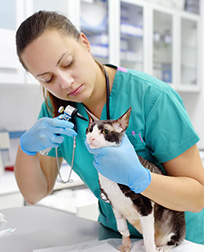
The Difference Between a Veterinary Technician & a Veterinary Technologist
From your research, it seems like becoming a veterinary technician is the job for you, but maybe you’ve also seen information about becoming a veterinary technologist. Wondering what’s the difference between them and which job is right for you? Here’s what you should know about the education, work, and certification needed to take the first step toward beginning a career you love helping animals.

We follow strict quality and ethics policies to make sure our content is honest, accurate, and helpful. Learn more about our editorial guidelines.
Key Takeaways
Veterinary technicians and veterinary technologists share many clinical duties, but the education path and some career doors differ based on degree level.
- Veterinary technicians complete an associate degree; veterinary technologists complete a bachelor's degree in veterinary technology.
- Both must pass the Veterinary Technician National Exam (VTNE) and meet their state's credentialing requirements.
- The Bureau of Labor Statistics projects 9% job growth for veterinary technologists and technicians, with 14,300 openings projected per year over the next decade.
- A bachelor's degree can open additional roles in research and laboratory settings.
- Credentialing requirements vary by state. Students should check with the veterinary licensing or credentialing authority in the state where they plan to work for the most current requirements.
What exactly separates a veterinary technician from a veterinary technologist?
The difference comes down to one thing: the degree earned. Veterinary technicians complete an associate degree program, while veterinary technologists complete a bachelor's degree in veterinary technology. Both groups then take the same licensing step, the VTNE, and follow their state's specific process to become credentialed.
The scope of work for veterinary technicians and technologists can vary by state and employer. If you’re someone who aspires to do work outside of the traditional clinical setting, pursuing the bachelor’s degree may be worth your while. Jobs in laboratory research or pharmaceutical testing facilities often list a bachelor’s degree as a baseline requirement, regardless of whether that degree is specifically in veterinary technology.
Read more: CVT vs LVT vs RVT: What’s the Difference?
Veterinary technician vs. veterinary technologist: How are they alike?
Both roles work directly with animal patients across a wide range of settings, including private clinics, specialty hospitals, veterinary schools, farms, and zoos. They perform many of the same hands-on tasks, such as:
- Drawing blood and collecting samples for laboratory testing
- Taking radiographs
- Assisting in surgery and performing CPR when needed
- Placing bandages and splints
- Performing dental care and cleanings
Credentialed professionals in either path can also pursue specialization through one of the academies recognized by the National Association of Veterinary Technicians in America (NAVTA). Earning Veterinary Technician Specialist (VTS) status can open additional opportunities, such as contributing to veterinary journals or speaking at continuing education events, and reflects an ongoing commitment to the field.
Why does the demand for this work matter right now?
According to the Bureau of Labor Statistics, veterinary technologists and technicians earn a median annual salary of $45,980, with about 134,200 people currently working in the field. The BLS projects nine percent job growth for this occupation, described as much faster than average, along with 14,300 openings projected per year over the next decade.*
Veterinarians often rely on trained support staff and clinics across the country are looking to fill these roles, so seeking out more credentials in the field can benefit you and your career.
Can this training actually fit around a full life?
For many people considering this field, the biggest question isn't about the work itself. It's whether they can realistically fit an education program around a job, family, or other responsibilities already on their plate.
This is where program format matters as much as program content. Penn Foster College's online Veterinary Technician Associate Degree and Veterinary Technology Bachelor’s Degree are self-paced, which means there are no set class times to work around. Learners move through coursework on their own schedule, whether that means studying in short bursts between shifts or dedicating longer blocks of time on weekends.
A vet tech associate degree is a prerequisite for Penn Foster’s Veterinary Technology program.
What does the associate degree actually cover?
In the Penn Foster Veterinary Technician Associate Degree Program students will gain knowledge from course material as well as hands-on experience through two required, in-person externships. You’ll get to work with small animals like cats and dogs in your first externship and larger animals in your second externship, like horses and cows.
Some of the topics you’ll cover include:
- Animal anatomy and physiology
- Pharmacology for veterinary technicians
- Surgical nursing
- Small and large animal medicine
- Laboratory animal medicine and nursing
Is the associate degree the right starting point?
For many people entering this field, the associate degree is the practical first step. The program is designed to prepare graduates to pursue VTNE eligibility and state credentialing requirements. It also opens the door to clinical roles in general practice, specialty hospitals, and other animal care settings.
A bachelor's degree, earned later if a technician chooses to continue their education, tends to matter most for those aiming at research, laboratory, or non-clinical career paths. Penn Foster’s Veterinary Technology Bachelor’s Degree Program is designed for students who have already earned an AVMA-accredited associate degree.
What's a reasonable next step?
Deciding between a technician and technologist path doesn't have to happen all at once. Starting with the associate degree keeps both doors open: it prepares graduates to sit for the VTNE and start working, while leaving room to pursue a bachelor's degree later if research or lab work becomes a goal.
For anyone weighing this decision, one option is to review the specific curriculum, externship requirements, and current tuition details for both Penn Foster College's Veterinary Technician Associate Degree Program and Penn Foster Veterinary Technology Bachelor's Degree Program before making a choice. Doing research can help you determine which route you want to go and what’s best for your career. You can also request more information to see if getting training online is right for you.
Sources
*Bureau of Labor Statistics, U.S. Department of Labor. Veterinary Technologists and Technicians. Occupational Outlook Handbook.