Sterile Processing Technician Training: Online or Onsite?

We follow strict quality and ethics policies to make sure our content is honest, accurate, and helpful. Learn more about our editorial guidelines.
If you want to become a sterile processing technician, your schedule and preferred way of learning can help narrow your training options. If hands-on practice is important to you, look for a program that offers it.
Both online and onsite sterile processing technician training can prepare students for the Certified Registered Central Service Technician (CRCST) exam. If you need to fit coursework around an existing schedule, an online program may be easier to manage. Students who prefer learning in person may appreciate the classroom and lab experience offered by an onsite program.
Key Takeaways
- Online training offers greater flexibility, making it easier to balance sterile processing coursework with work, family, and other responsibilities.
- Onsite training can provide more hands-on experience, while both online and in-person programs can help prepare students for the CRCST exam.
- You don't need a college degree to get started, but certification requirements vary by state and employer, so it's important to understand the requirements where you plan to work.
What does sterile processing technician training actually involve?
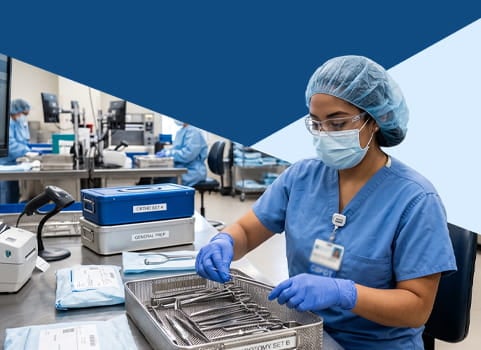
Sterile processing technicians clean, sterilize, and prepare surgical instruments so hospitals and surgical centers can operate safely. It's detailed work. One missed step in the decontamination process can put patients at risk, so training programs often spend a lot of time on aseptic technique, infection control, and instrument identification.
The Sterile Processing Career Diploma at Penn Foster covers these areas along with foundational topics in anatomy, microbiology, and workplace communication.
What are the pros and cons of online sterile processing training?
For many students, online training offers a practical way to prepare for a healthcare support role while keeping up with the rest of life.
Pros
- Study on a personal schedule, without fixed class times
- Course material can typically be revisited as often as needed
- Often more accessible for people balancing a job, kids, or other responsibilities
- Materials and exams may be included in the tuition cost, depending on the program
Cons
- No built-in classroom accountability, so self-motivation matters
- Hands-on practice may need to happen separately, depending on the program and employer expectations
- Networking with classmates or instructors may be more limited than in a physical classroom
What are the pros and cons of onsite sterile processing training?
Onsite programs, often run through community colleges or hospital-based training centers, may take a more traditional approach.
Pros
- In-person instruction and direct access to instructors
- Lab time with real or simulated surgical instruments
- Built-in class schedule, which can help some learners stay on track
- Peer interaction and study groups
Cons
- Fixed class schedules can be hard to manage around work or caregiving
- Commuting adds time and cost
- Programs may take longer to complete if only offered part-time
How do you know which training format fits your life?
There's no single right answer here. It depends on how a person learns best and what their week actually looks like.
Some questions worth asking before choosing a format include:
- Does a set class schedule help or hurt focus?
- Is there a hospital or facility nearby that requires hands-on hours before hiring?
- How much time do you realistically have available each week for coursework?
Read more: Sterile Processing Program Options for Career Changers 2026
Do you need a degree to become a sterile processing technician?
No degree is required. Most sterile processing technician roles ask for a high school diploma or equivalent, plus completion of a training program that prepares candidates for certification. There is, however, a 400-hour hands-on requirement in order to get certified.
Since the entry point is more accessible than many other healthcare paths, this field often draws career pivoters and adults returning to school after a long break.
Read more: 6 Tips for Going Back to College or Career School as an Adult
How do you get certified as a sterile processing technician?
Certification generally follows this path:
- Complete a sterile processing training program.
- Register for the CRCST exam through the Healthcare Sterile Processing Association (HSPA).
- Pass the exam to earn the CRCST credential.
- Maintain certification through continuing education, as required by HSPA.
The Sterile Processing Career Diploma can help prepare students to sit for the CRCST exam, and the exam cost is included in the program tuition so there’s no separate budgeting that needs to happen for it. Sharon Jones, Sterile Processing Instructor at Penn Foster, offers some advice to prepare for the certification exam. “Make flash cards and practice with friends and family. Write down questions and answers in a notebook. Record questions and answers to play back and listen in your spare time.”
Is certification required in every state?
Certification requirements for sterile processing technicians vary from state to state and even from employer to employer. Some states require certification for employment, while others treat it as a preferred qualification rather than a strict requirement.
Anyone considering this career may want to look into their specific state's rules, along with the expectations of hospitals or surgical centers in their area, before assuming certification is optional. Even if it’s not a requirement, being certified can help you stand out to employers and can even earn you a higher salary.
What does a sterile processing technician do day to day?
During a typical shift, sterile processing technicians collect used surgical instruments from operating rooms. They clean and decontaminate each instrument according to strict protocols before sterilizing the equipment with autoclaves or other approved methods.
Technicians also inspect instruments for damage before they are reused and assemble instrument trays for upcoming procedures. Tracking inventory and documenting sterilization records are also part of the job.
It's steady, hands-on work that plays a direct role in patient safety, even though sterile processing techs rarely interact with patients themselves.
Read more: What Does a Sterile Processing Tech Do? (Duties, Salary, & FAQs)
How much does sterile processing technician training cost?
Sterile processing training does not have a standard price. The cost may depend on whether you study online or in person and on the type of school you choose.
The Sterile Processing Career Diploma from Penn Foster Career School currently, as of August 2026, is under $1000 if you’re able to do the full pay option. There are also monthly payment plan options, however, for those who are on a budget and need a program that can be manageable.
Community college and hospital-based onsite programs often carry additional costs for lab fees, commuting, and materials that online programs may not have or bundle into a single tuition price.
Where to go from here
Now that you know more about these two options, you can decide which one is best for you and your situation.
Both paths can lead to the same destination: eligibility to sit for the CRCST exam and a role in a great field that currently has 72,760 jobs nationwide, according to the Bureau of Labor Statistics.*
If you’re weighing your options, you might find it helpful to review program details, curriculum, and current tuition for the Sterile Processing Career Diploma and requesting information to determine if the online format works for you and everything you have going on in your life.
Sources
*Bureau of Labor Statistics, U.S. Department of Labor. "Medical Equipment Preparers." Occupational Employment and Wage Statistics Query System. Accessed October 24, 2025.