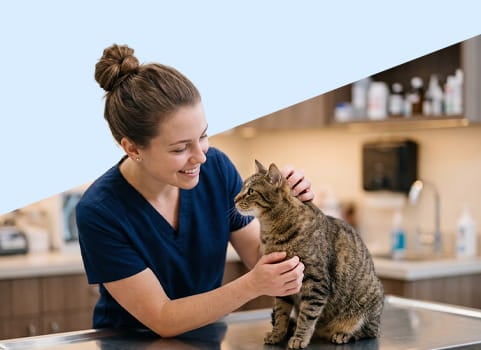
The Realities of Working in a Veterinary Clinic: What No One Tells You

*This blog was reviewed for accuracy by Heather Leer, CVT and Externship Coordinator at Penn Foster.
We follow strict quality and ethics policies to make sure our content is honest, accurate, and helpful. Learn more about our editorial guidelines.
Key Takeaways: What is working in a veterinary clinic really like?
- Working in a vet clinic is hands-on and can be physically demanding. You are not just around animals; you are restraining, lifting, cleaning, and staying alert in fast-moving situations.
- Animal behavior skills matter a lot. Safe handling, reading body language, and using the right restraint techniques to protect both the animal and the staff are all incredibly important.
- Emotional resilience is just as important as technical ability. Veterinary work can involve sick pets, stressful emergencies, and comforting worried owners, so compassion and professionalism are essential.
- Success in an entry-level veterinary role can depend as much on your attitude as your experience. Clinics often value dependable, adaptable team players who communicate well, provide excellent customer service, and are eager to learn.
If you’re enrolled in one of our veterinary programs to become a veterinarian technician, technologist, or assistant, you might have dreamed of working with animals for your whole life. Now that you’re inching closer to working in a clinic, you may be filled with excitement but also, maybe a twinge of nerves. What’s it really like to work in a veterinary clinic?
In this blog, we'll cover the rewarding parts of working in a veterinary clinic without shying away from the parts that aren’t full of snuggles and adorable, slobbery kisses. Keep reading to get a realistic peak at what’s in store for you.
You’ll be working hands-on with animals, not just around them
The idealized version of working in a vet clinic might involve a lot of sweet pets to the top of patients’ heads and maybe an occasional small love bite from a slightly more aggressive animal. While there are plenty of cute moments to look forward to with your furry (and sometimes hairless) patients, there are some high stress moments as well.
Some of the animals you’ll be working with are more than slightly aggressive. Some may scratch or bite or need to be muzzled the entire time. Some may even try to go after other animals in the waiting room. When you’re working with animals, you’re usually working with all types of animals, not just the cuddly, sweet ones.
It’s also important to keep in mind that many animals you’ll see will have very serious health issues, some of which may be emotionally taxing to witness and even potentially can take a physical toll. While working with these particular animals can be challenging, it can also be some of the most rewarding parts of the job.
Read more: Is a Veterinary Career Right for You? 5 Questions to Ask Before Enrolling
Why restraint is one of the first skills you need
The animals you’ll be working with will need to be restrained in order to provide the needed care, like administering vaccines/medications or even simply taking their temperature. The level of restraint necessary is dependent on the specific animal. They may also need to be restrained if they are highly aggressive.
Knowing how to properly and safely restrain an animal is important from the get-go because it can:
- Prevent injury to you, other staff members, and the animal
- Allow accurate examinations and treatments
- Reduce stress in the animal
Situational awareness around fearful or aggressive animals
Many animals are highly anxious when it’s time for a vet appointment. Cats, for example, are often already worked up before they even leave the house after putting up an award-winning fight with their humans who try to put them in their travel carrier. The car ride to the vet is often very stressful for them as well, so by the time they reach the vet office, they are untrusting, afraid, and possibly physically shaking. This isn’t exclusive to cats, either.
None of this is probably surprising if you have a pet of your own. It is, however, a bit different when it’s other people’s pets you're professionally working with. You want to be observant of things like an animal’s body language to know how to approach and handle them and watch out for any triggers that may be impacting the animal’s state.
Communication is also key when working with all animals, but these ones especially. Listen to the pet owners, don’t be dismissive, and communicate what they tell you as well as what you’ve observed to the rest of the staff who will be working with that animal.
Read more: How to Become Certified as a Vet Tech (State by State)
What “safe handling” really means in practice
One of the most important things to remember when working in a vet clinic is that the animals you’ll be working with almost always come with a human attached to them. While some are strays that good Samaritans bring in for care, most are household pets. This means they’re, for many people, the equivalent of children. Safe handling is crucial for the animals’ well-being and also for the humans to feel comfortable with the care being provided.
Safe handling tactics include:
- Using the least amount of restraint necessary and, when it is necessary, applying it properly to safely perform a procedure.
- Reading the animal's body language to recognize fear, stress, pain, or aggression.
- Using safety equipment when needed, such as muzzles, towels, cat bags, gloves, or slip leads.
- Maintaining awareness of your surroundings and having a plan if an animal becomes frightened or aggressive.
- Preventing escapes and injuries by securing doors, cages, and examination areas.
Read more: Fear Free Certification for Penn Foster Vet Tech Students
You’ll be working with other people in a team environment
Pet owners aren’t the only people you’ll be around when working in a veterinary clinic. You’ll be part of a team made up of other staff members who work together to care for all the animals that come in. Sometimes, when working on a team, personalities can clash, creating stress that has nothing to do with job duties.
When you work somewhere like a vet clinic where the literal lives of animals can be in your hands, you can’t let office politics get to you. There has to be a level of trust among team members since you’re all working towards the same goal: providing the best care possible to your patients.
Read more: How a Vet Assistant Can Become a Vet Tech
Some parts of the job can be physically and emotionally demanding
Working with animals is incredibly rewarding, but rewarding things are often difficult things. When you work in a vet clinic, you are often working with large animals, like large dog breeds, that require physical strength to care for. Sometimes the large animals are just giant teddy bears though, and the smaller animals are the ones who cause the most damage to your body. Many cats bite and scratch, and you may come home from work looking like your arms have gone through a woodchipper. It’s unlikely you’ll never come out of a work day with a war wound, but it’s important to remember that aggression in animals at the vet often happens as a result of fear or anxiety.
The physical toll might be nothing compared to the emotional toll. That sentiment isn’t meant to discourage you, but rather supply you with a realistic expectation of what you’re in for. The unfortunate reality of working in a vet’s office is that, sometimes, pets die. When an animal is very sick, watching them suffer can be difficult, and being a comfort to the pet owners who have put their fur babies down can affect you more than you might think.
Heather Leer, CVT and an Externship Coordinator for Penn Foster’s Veterinary programs, explains what this can feel like. "You're experiencing clients for the first time. Maybe you're experiencing euthanasia for the first time... some people just don't respond to it as well as they thought they would." She goes on to say, “It's harder the longer you've been in clinic. The more you know your clients, and you know their pets, they kind of become a part of your family, too.”
You may not think about compassion as a skill, but when you work in a vet clinic it’s a necessary soft skill when you’re interacting with pet owners. It also can be very hard to maintain. Compassion fatigue is a real thing, and many veterinary technicians fall victim to it. CoVet reports on a NAVTA survey of veterinary staff that found 65% of respondents cite compassion fatigue as their top wellbeing challenge.
The good news is that those in the veterinary field are very aware of this issue and some practices, clinics, and hospitals are prioritizing the mental health of their employees. BluePearl, for example, offers many workplace wellness programs, as well as many mental health benefits and support services to their Associates.
Emotional realities
You’ll likely participate in some of the following when working in a vet clinic:
- Comforting anxious pets and concerned owners.
- Handling emotional situations with compassion.
- Supporting families through difficult diagnoses.
- Celebrating patient recoveries and successes.
- Managing stress during emergencies and critical cases.
- Building strong relationships with clients and their pets.
Physical demands
Physically, you may find yourself doing some or all of the following when working in a vet clinic:
- Standing and walking for much of the workday.
- Lifting and restraining animals safely.
- Moving quickly during emergencies and busy periods.
- Bending, kneeling, and reaching while handling patients.
- Assisting with cleaning, stocking, and equipment setup.
- Staying active in a fast-paced clinical environment.
Read more: Rabies Pre-Exposure Vaccine: What Vet Tech Students Should Know
Why resilience matters more than people expect
Resilience matters in most jobs, but when the job deals with living things, it’s a bit more important than it might be in some other fields. You have to be able to adapt to the situation at hand, especially if there’s an emergency. It also takes a lot of inner strength to work with particularly sick animals and their humans, and then be able to take on regular check-ups the same day. You can’t let the rough cases impact your quality of care for the run-of-the-mill daily cases.
Read more: How Online Vet Tech School Helped Madison Take Control of Her Future
Common mistakes new veterinary assistants or technicians make
When you’re new, it’s easy to make mistakes. It’s even expected. Unfortunately, the stakes are a bit higher when working with animals than working other places. Here are some common mistakes new veterinary staff members might make:
- Not asking questions when unsure
- Overlooking small details in medical records, treatment instructions, or patient information.
- Improper animal restraint
- Misjudging animal behavior and missing signs of fear, anxiety, or aggression.
- Poor time management during busy clinic hours.
- Skipping or rushing sanitation protocols
- Forgetting to double-check medications and dosages before administration.
- Taking difficult client interactions personally instead of maintaining professionalism.
- Failing to communicate clearly with veterinarians and team members.
- Neglecting self-care, which can contribute to stress and burnout.
- Trying to do everything independently rather than relying on experienced team members for guidance.
- Underestimating the physical demands of the job, including lifting, standing, and fast-paced work.
What veterinary clinics look for in entry-level candidates
When applying for your first job at a veterinary clinic, it can be a good idea to look into what criteria hiring managers often look for. This could be different depending on the clinic, the manager, or even the state you live in, but some things to keep in mind may include:
- Dependability
- Strong customer service skills
- Adaptability
- Emotional and physical resilience
- Comfort working with animals of all sizes
- Ability to work as part of a team
Those are just some of the skills you may want to develop before you set out on the job hunt.
Read more: What Veterinary Clinics Actually Look for in Entry-Level Vet Tech Candidates (And How to Stand Out)
How to know if this type of work is right for you
A love of animals is a great start, but there’s a resilience necessary for this work that makes it not always the best fit for everyone. And that’s okay!
If you feel like you can handle the stress and hard moments that come with working in a veterinary clinic, this can be the perfect field for you. While there’s no denying there are emotional and physical hardships that come with working in a vet clinic, the work can be rewarding and even healing for some people.
How training helps you prepare for these realities
Going into any new job blind can increase the stress that undoubtedly is already there when you’re entering into the unknown. This can especially be true in a role at a vet clinic where the stakes are higher than other fields of work.
Training programs teach you what to expect and, more importantly, how to handle most situations that may come up. Penn Foster’s Veterinary Technician Program includes two required externships where students get real, in-person experience in a veterinary office or hospital. This is often an opportunity to really get an understanding of what working in this type of atmosphere is like and see if it’s right for you.
Read more: Real Student Stories: How Kelsy Found Her Path as a Mom, Military Spouse, and Future RVT
Next steps: turning interest into a career path
Working with animals is not only rewarding work; it’s also incredibly important. That’s why it’s vital that you know all the realities of working in this type of environment. Heather puts it in terms that are easy to understand: "As a technician, we have a lot of responsibilities and really, lives in the palms of our hands."
If your interest hasn't waned and you’re ready to really pursue a job in this field, fantastic! The world needs more dedicated veterinary workers for all the animals out there that can’t advocate for themselves. A great place to start when beginning to think seriously about veterinary work is enrolling in a training program. Penn Foster’s veterinary programs can be a great option for you if you’re looking to get accredited training and real-world experience. To learn more about how these programs work, request information or call an admissions specialist at 1-800-275-4410 to get your questions answered!